
Oxford Center
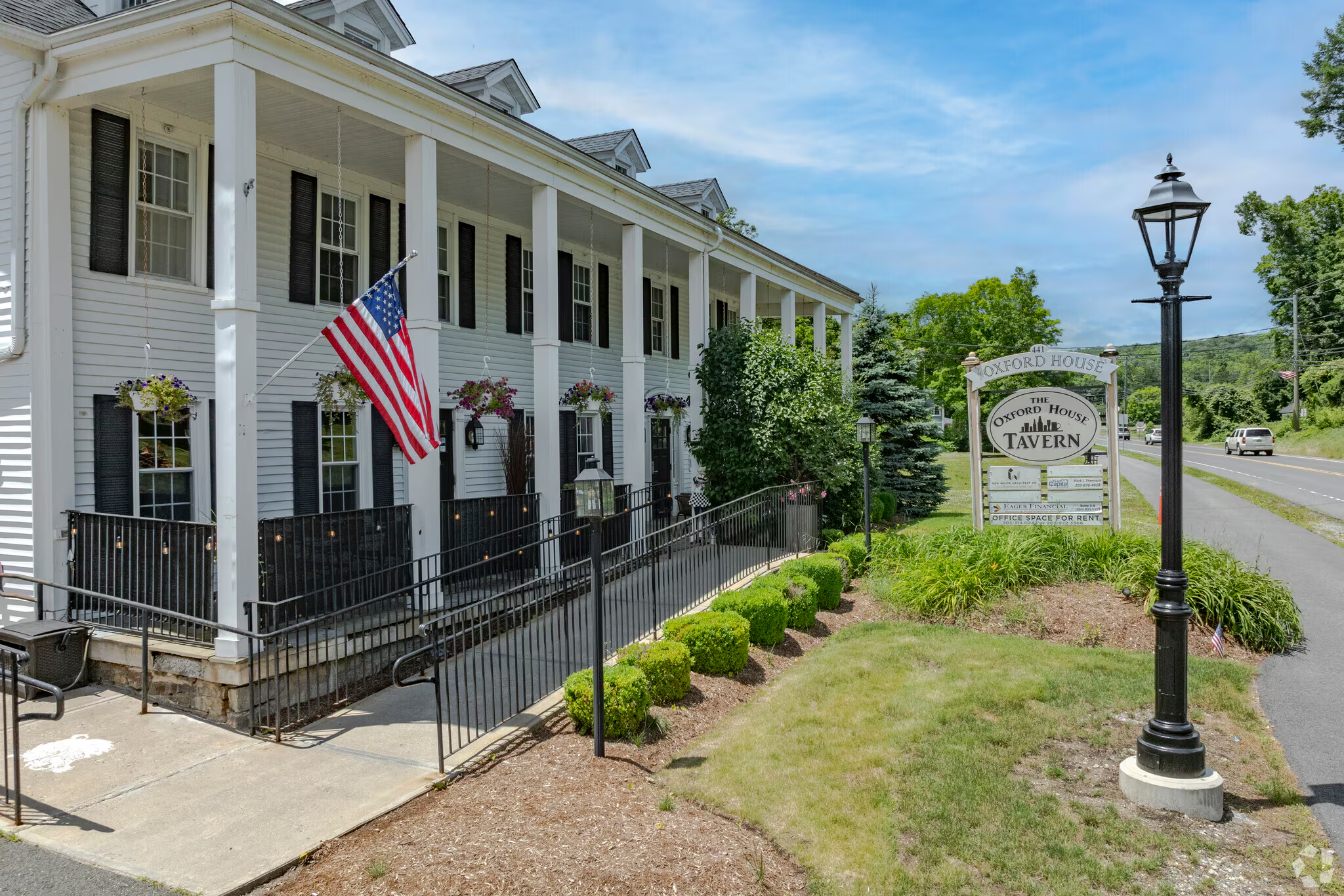
The historic heart of town along Route 67, anchored by Town Hall, the public library, and the parks that host community events like the annual Oxford Day celebration.
Why Oxford
This page is the honest overview of Oxford, Connecticut: a town of roughly 12,700 people at the western edge of the Naugatuck Valley, with a 200-year history, real open space, and easy access to the region's job centers. Here is what makes it worth knowing about.
The town's story
Oxford's first farms were part of the town of Derby, settled in the late 1600s on land that had belonged to the Pootatuck and Paugussett peoples. In 1741 the settlement became its own parish, and in 1798 the Connecticut General Assembly incorporated it as a town, naming it for Oxford, England.
For most of its history Oxford stayed quietly rural. In the 1700s farmers drove livestock along its roads from Litchfield to the port of New Haven, and the town grew slowly for two centuries. That is why, even today, much of Oxford is still woods, fields, and stone walls rather than dense development.
Growth picked up in the modern era. The population went from about 9,800 residents in 2000 to roughly 12,700 by the 2020 Census, making Oxford one of Connecticut's fastest-growing towns while keeping its low-density character, around 388 people per square mile.
"Oxford is a town that still feels like a small town, quiet, green, and close to everything that matters."
Susan Hotchkiss
Setting
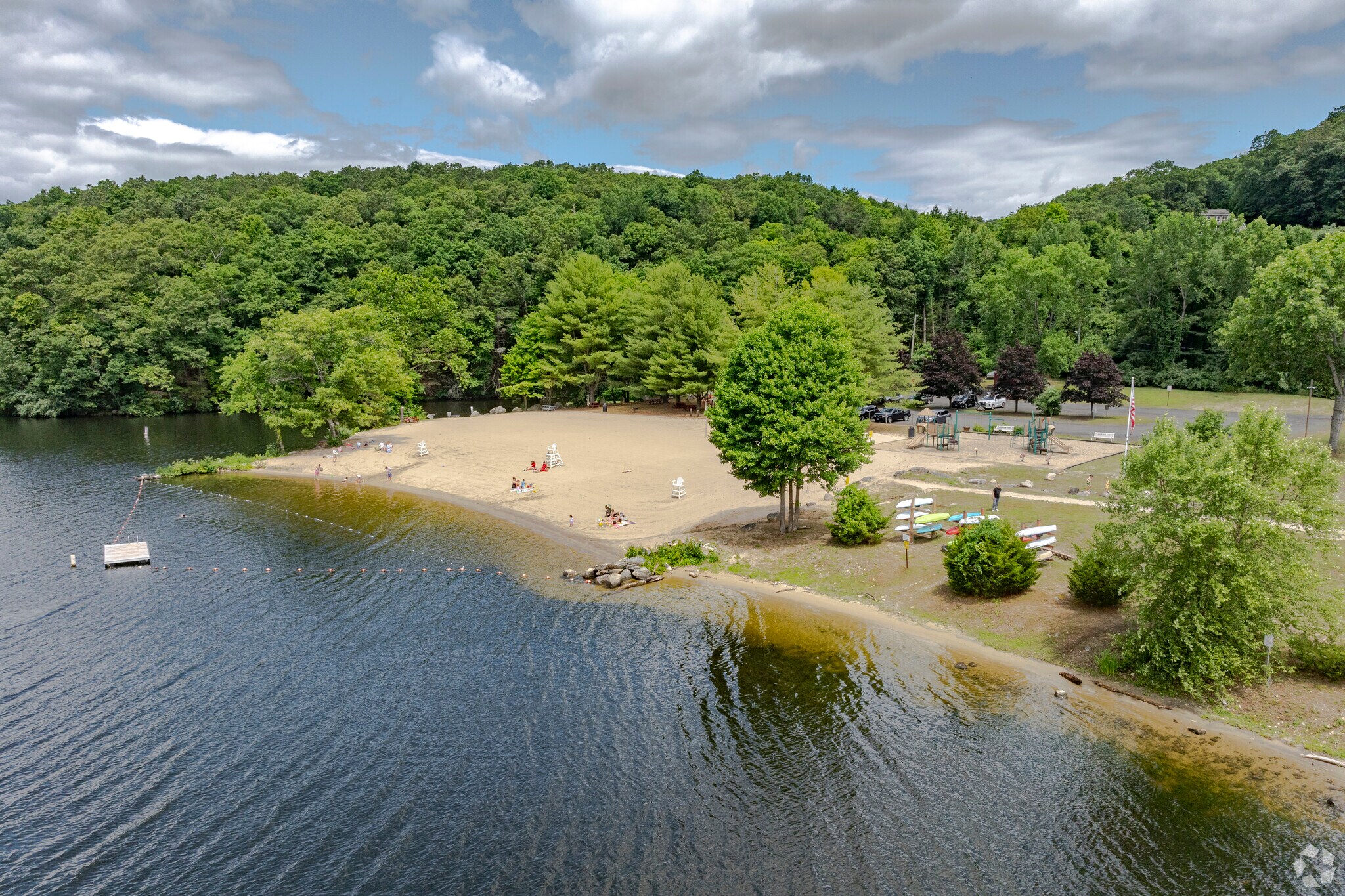
Oxford sits where the Naugatuck Valley meets the Housatonic River country. The Housatonic curves along the town's western border, and Lake Zoar, the wide impoundment of the river, touches Oxford's shoreline at Jackson Cove.
The land rolls and climbs: most of the town is wooded hillside, and even the busiest roads feel like country lanes. You can drive from the center of Oxford to open state forest in either direction, and the nesting birds and quiet cul-de-sacs are part of daily life.
Practical access is surprisingly good. Route 67 runs east to west across town, Route 188 connects to the north, and the Route 8 and I-84 corridors are a short drive away, which is what makes the commute page worth reading.
Proximity
Oxford is a bedroom town in the best sense: quiet at home, connected when you need to be. These are typical driving distances and times.
| Destination | Distance | Typical drive |
|---|---|---|
| New Haven | About 14–15 miles | Roughly a half hour |
| Waterbury | About 13 miles | Roughly 20 minutes |
| Danbury | About 24 miles | Roughly a half hour |
| Hartford | About 42 miles | Roughly an hour |
| New York City | Via Metro-North from Seymour | Roughly 2 hours total |
Times are typical off-peak estimates from central Oxford. Actual times vary with traffic, weather, and your exact starting point.
Villages & character
The historic heart of town along Route 67, anchored by Town Hall, the public library, and the parks that host community events like the annual Oxford Day celebration.
The older settlement at the western edge of town, whose historic district is listed on the National Register of Historic Places. It is the part of Oxford closest to Southbury and the Housatonic.
The southeastern corner of town along the Housatonic and near Lake Zoar, where the landscape opens onto the river and Jackson Cove Park offers beach access and trails.
The commercial heart of town.
Quarry Walk, the mixed-use village on Route 67, is where Oxford gathers: shops and restaurants around Center Rock Green, a grocery store, a pharmacy, and apartments above the storefronts. It gives the town a walkable, small-city amenity without changing Oxford's rural character.
The honest picture
Space and privacy. Larger lots, woods, and quiet roads are the norm; this is not a town of tight subdivisions.
Outdoor life. Jackson Cove beach on Lake Zoar, miles of trails, river access, and state parks minutes away.
Small-town community. A farmers market at Town Hall on Saturdays, an annual Oxford Day, and active clubs and committees.
Trade-offs. Oxford is car-dependent, and daily amenities are spread along Route 67 rather than gathered on a walkable Main Street. Winters need real snow handling from residents.
Susan knows this market street by street. A quick conversation will tell you more than any website.
Get in touch with Susan